
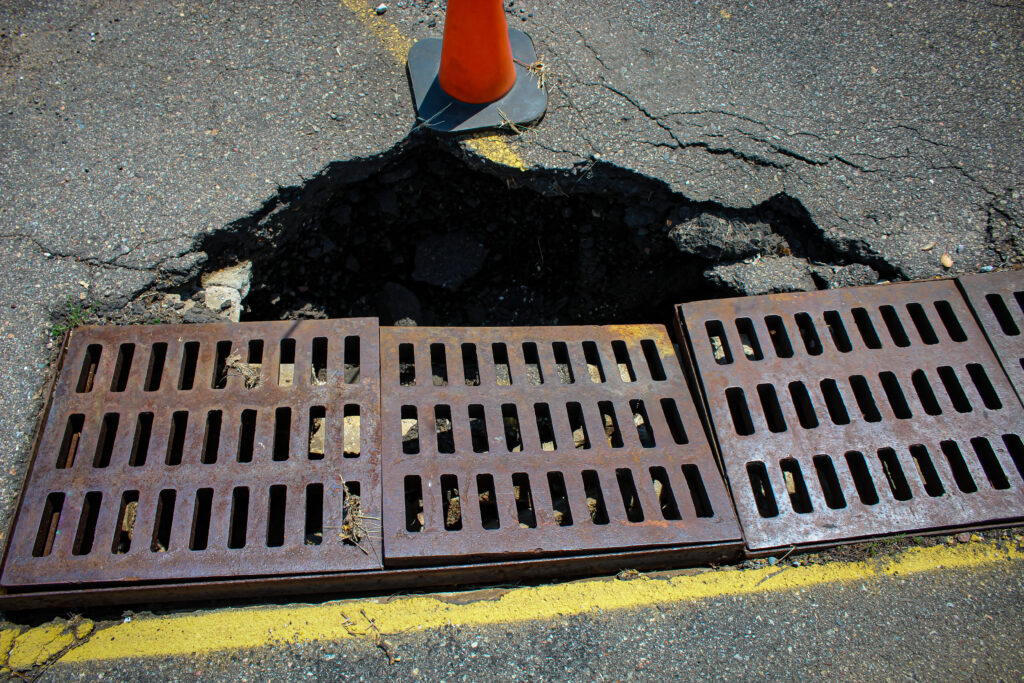
Repaving is the most expensive decision a property manager can make about a parking lot, and it gets made too early all the time. Fresh blacktop looks great in a budget presentation. But when the damage is scattered potholes and failed patches on a lot whose base is still sound, a full repave throws away years of usable pavement life along with the capital that paid for it.
This guide is for the people who sign off on that decision: property and facility managers, HOA and condo boards, and portfolio operations teams across the Mid-Atlantic and Florida. It covers how to read what your pavement is telling you, when repair genuinely beats repaving, what separates a lasting repair from a throw-and-go patch, and how to vet the contractor who bids the work.
Key takeaways
- Repair is the right call when distress is isolated and the base is mostly sound; repaving earns its cost only when base failure, heaving, or trapped water is widespread across the lot.
- Each distress type is a diagnosis: alligator cracking signals structural failure, rutting points at the base, raveling is age and oxidation, and ponding water is a drainage problem no surface fix will cure.
- A repair that lasts removes failed material down to firm base and bonds new asphalt to old with no cold seam; a patch tossed into the hole and tamped flat is a repeat work order waiting to happen.
- Compare bids on scope and method, never on the bottom-line number alone. A vague “repair as needed” line can hide the difference between a rebuilt section and a cosmetic fill.
- A free professional inspection documents every failure point before you commit budget, so the decision between repair and repave rests on what is under the surface, not on how the lot looks from a car window.
When does repair beat repaving a commercial parking lot?
Direct answer
Repair wins when the damage is localized: potholes, failed patches, and edge breaks in specific areas while the base underneath stays sound. Repaving is the honest answer only when base failure, heaving, or chronic trapped water runs across large sections of the lot. Most lots that get repaved are somewhere short of that.
Targeted repair adds years of service to pavement you already own, keeps entrances and drive lanes open while the work happens, and concentrates budget on the areas that actually carry risk. Repaving resets the whole surface, at the whole-surface price, with the shutdowns to match.
The tell is distribution. Damage clustered in drive lanes, around drainage structures, or along edges is a repair program. Damage everywhere, with the base moving underneath it, is a capital project. A structured evaluation, a full walk-through and, where warranted, test cuts into the pavement, is what separates the two. A drive-by glance cannot see the base, and the base is where the decision lives. Our commercial repair solutions page shows what a repair-first program looks like at every scale.
What is your pavement actually telling you?
Direct answer
Read the distress like a symptom list: alligator cracking means structural failure, rutting means base or compaction problems, raveling means age and oxidation, ponding water means drainage and slope failure, and edge breaks mean the pavement has lost support at its border. The pattern tells you repair or repave.
Every distress type points somewhere specific:
- Alligator cracking: tight, blocky cracking that looks like reptile skin. This is the pavement flexing over a failing base, the strongest single argument for deeper work in that area.
- Rutting: wheel paths sitting lower than the surrounding surface, usually a base or compaction problem that a surface fix will not hold on.
- Raveling: a rough, loosening surface shedding stone, the signature of age and UV oxidation.
- Ponding water: standing water after rain. This is a drainage and slope problem, and water that sits will find its way into the base and multiply every other problem on this list.
- Edge breaks: crumbling where asphalt meets curbs, concrete, or soil, where the pavement has the least support.
Timing your evaluation matters more than most managers expect. Late summer is ideal: heat-related cracking and oxidation are at their most visible, you can watch how the lot actually handles a hard rain, and there is still a scheduling window to get repairs completed before winter moisture makes every opening worse. If a storm just moved through, our 24 to 72 hour triage framework covers how to sort urgent hazards from plannable work.
What separates a permanent repair from a throw-and-go patch?
Direct answer
A permanent repair removes the failed material down to base that can carry load, corrects that base where needed, and bonds new asphalt to the old surface hot, with no cold seam for water to re-enter. A throw-and-go patch skips all of that, which is why the same hole keeps coming back.
Not every line item that says “repair” buys you the same thing. The quick version, material tossed into the hole, tamped, and left behind, fails early because nothing about the failure changed: the water path is still open and the cold seam around the patch is the next way in.
Work that lasts looks different. The failed area comes out completely. The base gets inspected and corrected where it has softened. Then the new asphalt is bonded to the surrounding pavement rather than merely sitting inside it. That seamless bond is the entire point of the thermal asphalt recycling method our crews run: the pavement around the failure is heated, reworked with fresh material, and compacted as one continuous surface, which removes the loose edge where conventional patches fail first.
Whatever contractor you use, get the method in writing. A proposal should name the repair areas and depths, say what happens to the failed material, and state how the new work ties into the old surface. Vague scope is where lowball bids hide, and it is also how a lot ends up wearing the same repair three times.
How do you vet a commercial parking lot repair contractor?
Direct answer
Compare scope and method before price: named repair areas and depths, base correction spelled out, and how new asphalt bonds to old. Then ask for similar properties they have served, who actually performs and supervises the work, and how they will keep your lot open while it happens.
When bids land, the lowest number is the loudest and the least informative. Put the proposals side by side on substance first:
- Defined repair areas and depths, not “repair as needed”
- What happens to failed material and soft base, stated plainly
- How the repair ties into the surrounding pavement, seam or no seam
- A traffic control and staging plan, so the lot keeps operating during the work
Then the questions that sort operators from invoicers: Have you served properties like ours, retail, medical, HOA, industrial, hospitality? Can you show similar repairs and how they have held up? Who performs the work and who supervises quality on site? A contractor working active commercial facilities should also carry a documented safety program and understand the ADA details that touch accessible routes and ramps after repairs.
For portfolios, coordination is its own criterion. A single point of contact for scheduling, tenant notices, and punch-list items keeps a multi-property program sane, and structured programs like the PARC Program exist to run exactly that coordination across locations.
How should multi-site portfolios plan pavement work?
Direct answer
Rank sites by liability risk, customer impact, and asset value, keep a simple condition tier for each lot updated after every inspection, and run repairs on a one to three year plan. Managed that way, pavement stays a scheduled line item instead of a string of emergencies.
One lot can be managed by memory. Twenty cannot. Portfolio pavement works when it runs on a plan: rank the sites, inspect them on the same standard so conditions are comparable, and update a simple tiered priority list after each pass. Budgeting gets predictable because surprises get rare.
Sequence matters inside the plan too. Structural problems get corrected first, always, so nothing cosmetic ever goes down over a failure that will crack straight back through it. And schedule with the calendar in mind: late summer and early fall give you warm temperatures and a clean runway before winter moisture arrives. For managers coordinating work in markets like Hagerstown, MD, that window also has to thread shopping seasons, school calendars, and shipping cycles, which is exactly why the plan beats the scramble. Our multi-site repair SOP covers the scope, QA, and reporting standard that keeps every location on the same page.
Safety, liability, and what your lot says about the property
Pavement problems are safety problems wearing a maintenance label. Potholes, settled utility covers, and abrupt height changes generate trip hazards, vehicle damage claims, and ADA exposure on accessible routes and curb ramps. During planning, map the ADA routes and loading zones, flag the high-liability spots, and bring your risk or insurance contact into the prioritization.
The same surface is also a first impression. Tenants, customers, and leasing prospects read a smooth, well-kept lot as a managed property and a crumbling one as a neglected one, no matter how good the building looks. Repairs done section by section, the way busy sites get potholes fixed with zero disruption, protect both at once: the hazard is gone and the property never had to close to fix it.
Get a free inspection before you commit to repaving
Before repaving money gets spent, have someone qualified walk the lot and document what is actually failing and what is still sound. Pothole Repair crews serve commercial properties across the Mid-Atlantic and Florida, and the evaluation costs nothing: every failure point photographed and mapped, so the scope you approve matches the pavement you actually have. Request your free inspection at potholerepair.com or call 855-376-8465.
Frequently asked questions
How do I know if my parking lot needs repair or full repaving?
Look at distribution and depth. Damage confined to specific areas, potholes, failed patches, edge breaks, with a base that still carries load, is repair scope. Base failure, heaving, or chronic trapped water across large sections of the lot is repave scope. A professional evaluation with test cuts settles what the surface alone cannot show.
Do targeted repairs just delay an inevitable repave?
No. A lot with a sound base can be kept in service through targeted repair for as long as the base stays sound, because each proper repair removes a failure completely rather than covering it. Where repairs do precede an eventual repave, that is the plan working: the capital project lands years later, on your schedule instead of the pavement’s.
What should a written repair proposal include?
Named repair areas with depths, what happens to failed material and soft base, how the new asphalt ties into the existing surface, the traffic control and staging plan, and who supervises quality on site. If a proposal says “repair as needed” and little else, you are not comparing bids, you are comparing guesses.
Can parking lot repairs be done while the lot stays open?
Yes. Repairs run section by section: only the area being worked is coned off, and it reopens to traffic the same day. Entrances, drive lanes, and surrounding stalls stay in service, and scheduling follows the property’s slow hours, which is why repair rarely carries the operational cost repaving does.
