
Coordinating commercial asphalt repairs at active properties affects more than a maintenance checklist. It shapes how quickly hazards are addressed, how consistent repairs look, and how well pavement holds up under daily traffic.
Property managers should look beyond the immediate pothole. Repair volume, property type, access requirements, traffic patterns, and the impact of delayed damage should all guide the repair plan.
Key takeaways
- An in-house team can spot defects, cone off hazards and report pavement changes. Lasting repairs need trained crews, proper materials, traffic-control planning and equipment suited to the method.
- Limited, recurring touch-up work may need temporary attention while a longer-term plan is scheduled. Repeated potholes, widespread cracking or failures in busy traffic areas need a more thorough approach.
- Cold patch can restore drivability quickly in temporary or weather-dependent situations. Infrared heats and blends existing asphalt for a more seamless repair when conditions allow.
- Poor compaction, uneven patching and missed drainage are what cause the same location to fail again and again.
- Different property types need different planning: shopping centers around customer traffic, warehouses around deliveries, HOAs and multi-site portfolios around documented priorities and consistent standards.
What Can an In-House Maintenance Team Handle?
Direct answer: An organized maintenance team can spot defects, place cones around hazards, and report changes in pavement conditions. Lasting asphalt repairs go further, requiring trained crews, proper materials, traffic-control planning, and equipment suited to the repair method. Treating failures as isolated problems is what turns small defects into larger safety concerns.
An organized maintenance team can help spot defects, place cones around hazards, and report changes in pavement conditions. Lasting asphalt repairs often require trained crews, proper materials, traffic-control planning, and equipment suited to the repair method.
When repairs are rushed or treated as isolated problems, small failures can turn into larger safety and maintenance concerns. Property managers should consider the full job, including the surrounding asphalt, vehicle traffic, pedestrian access, drainage, and the need to keep the site operating smoothly.
How Do You Assess the Scope of Your Asphalt Needs?
Direct answer: Start with what the pavement is showing. Potholes and failed cold patches, alligator cracking, drainage-related deterioration, uneven trip hazards, and wear in drive lanes and loading areas each point to different needs. Limited touch-up work may need temporary attention, while repeated potholes or widespread cracking require a more thorough approach.
Commercial properties can face a wide range of pavement issues. Some are small and temporary. Others point to deeper failure below the surface.
Common concerns we see include:
- Potholes and failed cold patches
- Alligator cracking and broken asphalt edges
- Drainage-related deterioration and standing water
- Uneven surfaces that create trip hazards
- Wear in high-traffic drive lanes, loading areas, and parking spaces
Limited, recurring touch-up work may need temporary attention while a longer-term repair plan is scheduled. Repeated potholes, widespread cracking, or failures in busy traffic areas require a more thorough commercial asphalt repair approach.
Different properties also need different levels of planning. Shopping centers may need work scheduled around customer traffic. Warehouses may need clear access for deliveries. HOAs, municipalities, medical facilities, and multi-site portfolios often need documented repair priorities and consistent site standards.
What Labor, Equipment and Expertise Does Asphalt Repair Require?
Direct answer: Repair crews need trained personnel, safety procedures, proper tools, material storage, compaction equipment, weather awareness, and ongoing supervision. Without those pieces a patch may look complete but fail early. Method matters too: cold patch can restore drivability quickly, while infrared heats and blends existing asphalt for a more seamless repair.
Effective asphalt repair is not simply a matter of filling a hole. Repair crews need trained personnel, safety procedures, proper tools, material storage, compaction equipment, weather awareness, and ongoing supervision. Without those pieces in place, a patch may look complete but fail early.
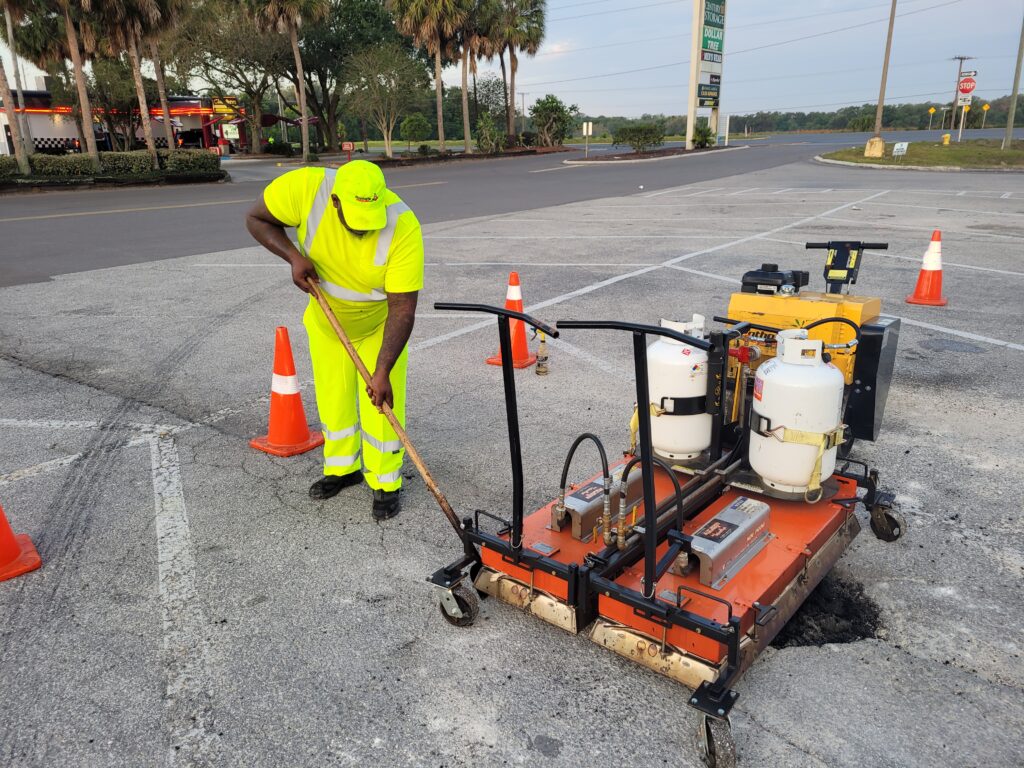
Professional crews bring a focused repair process and access to methods that fit the pavement condition. Our commercial pothole repair solutions can include infrared asphalt repair and professional cold-patch applications, depending on the site and the type of failure.
The repair method matters. Cold patch can help restore drivability quickly in temporary or weather-dependent situations. Infrared repair heats and blends existing asphalt, which can create a more seamless repair when pavement and site conditions allow. Each damaged area should be assessed rather than assuming one method works for every pothole.
How Do You Avoid Repeat Asphalt Repair Failures?
Direct answer: Poor compaction, uneven patching, and missed drainage issues lead to repeat failures. A qualified contractor looks beyond the visible pothole and evaluates whether cracking, water flow, failed prior repairs, or heavy traffic are contributing. That broader view is what prevents the same location from being treated again and again.
Poor compaction, uneven patching, and missed drainage issues can lead to repeat failures. Water can enter weak areas, traffic can break down patch edges, and an uneven repair can create concerns for drivers and pedestrians.
A qualified contractor should look beyond the visible pothole. Crews evaluate whether cracking, water flow, failed prior repairs, or heavy traffic may be contributing to the problem. That broader view helps prevent the same location from being treated again and again.
A dependable maintenance workflow often includes:
- Documenting defects with clear locations and photos
- Identifying urgent hazards that need immediate attention
- Grouping repairs by area to support efficient scheduling
- Planning work around tenants, customers, deliveries, and access needs
- Tracking completed repairs for future pavement decisions
Property oversight still matters throughout the repair process. Your team can inspect the property, report issues, set priorities, and coordinate access while repair crews complete technical work. For ongoing planning across properties, our PARC program can support a more organized approach to pavement repair needs.
How Do You Choose the Right Level of Repair Support?
Direct answer: Review the condition of your pavement, how often defects return, the consequences of downtime, and the access requirements for tenants, customers, and deliveries. Recurring failures, high-volume repairs, safety-sensitive areas, and work requiring specialized methods or traffic planning all need careful coordination rather than ad-hoc scheduling.
Active properties benefit from clear repair priorities, reliable scheduling, and methods suited to the pavement condition. Recurring failures, high-volume repairs, safety-sensitive areas, and work requiring specialized methods or traffic planning need careful coordination.
Before scheduling repairs, review the condition of your pavement, how often defects return, the consequences of downtime, and the access requirements for tenants, customers, and deliveries. A clear repair plan helps keep work consistent while protecting access and property standards.
Protect Your Pavement Investment
Pothole Repair helps commercial property teams choose practical repair solutions that fit their maintenance goals and operational needs. Request a quote for commercial asphalt services to address current pavement needs with a clear, professional plan. Our team is ready to help you keep your parking areas, drive lanes, and access points in dependable condition.
FAQs
How should commercial properties prioritize pothole repairs?
Prioritize defects that create immediate risks for drivers and pedestrians, block access, affect drainage, or appear in high-traffic areas. Clear documentation helps organize urgent and planned repairs.
What information should a property manager provide before asphalt repairs begin?
Property managers should provide repair locations, photos, access details, traffic patterns, operating hours, delivery schedules, and any tenant or customer access requirements.
Is infrared asphalt repair better than cold patch?
Each method serves a different purpose. Infrared repair can restore damaged asphalt by heating and blending existing pavement, while cold patch is often used for fast, temporary, or weather-dependent pothole repairs.
Can commercial asphalt repairs be scheduled around business operations?
Professional commercial asphalt contractors can coordinate repair schedules around tenant operations, customer traffic, deliveries, school activity, municipal access needs, and other property-specific requirements.
How often should commercial parking lots be inspected for potholes?
Regular pavement inspections are important, especially after winter weather, heavy rainfall, freeze-thaw cycles, or periods of high traffic. Early reporting can help keep small defects from growing into larger pavement failures.
