
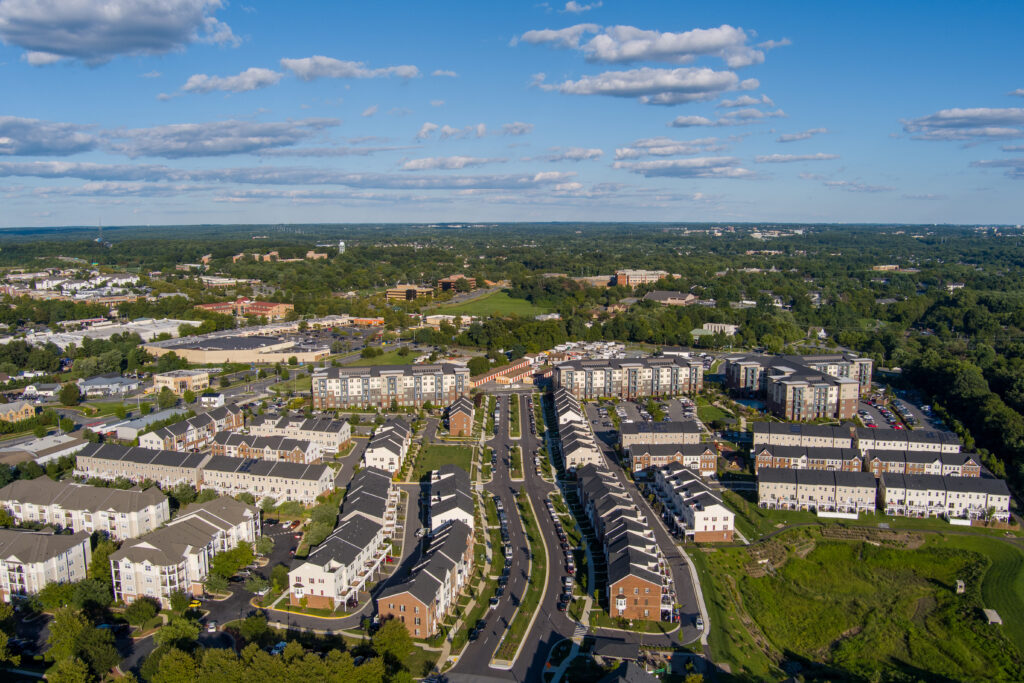
A pothole in a community parking lot is not really a maintenance ticket. It is a board decision. The association owns the common area, which means the board owns the timing, the method, and the paper trail behind whatever gets done. Residents may never read the reserve study, but they will absolutely notice the crater at the entrance to Building C, and they will ask about it at the next meeting.
Here is where most boards get steered wrong. Ask around about a failing lot and the answers come back sounding like one option: repave. That advice usually arrives from companies whose business is laying new asphalt, and it treats a lot with a handful of failures the same as a lot that is genuinely worn out. For most associations, the honest answer is smaller, faster, and far kinder to the budget. Repair the failures, protect the asphalt you already paid for, and save the capital for the year you truly need it.
Key takeaways
- The association almost always owns the parking lot as common area, so pothole repair is a board responsibility and a documented fiduciary decision, not an individual owner’s problem.
- Repairing isolated potholes and protecting the surrounding asphalt is usually the correct call. Full repaving is a capital project that a few dozen square feet of failure does not justify.
- Pothole repair generally belongs in the operating budget, while resurfacing and reconstruction belong in the reserve study. Boards that blur the two end up deferring cheap repairs into expensive capital cycles.
- Standing pre-authorization thresholds let a manager order safety repairs between meetings, which matters because asphalt fails on a weather schedule and boards meet on a calendar schedule.
- Inspection records, dated photos, and completion documentation are what protect the board when a trip-and-fall or vehicle-damage claim arrives.
Who is responsible for potholes in an HOA or condo parking lot?
Direct answer
In nearly every association, parking lots, drive aisles, and access roads are common area owned and maintained by the association. That makes the board responsible for inspecting, funding, and repairing potholes. Individual owners are rarely responsible, even for the space in front of their own unit.
Read your governing documents before you assume anything, because the line between common area and limited common element varies. In most condo and townhome communities we work with, the association holds the whole paved surface. Some communities assign a driveway apron to a unit while the association keeps the through lanes. Whichever way yours reads, the practical result is the same: the board is the buyer, the board sets the standard, and the board carries the exposure when a surface defect hurts someone.
That responsibility is why asphalt deserves a real line in your planning rather than a reactive scramble. Our HOA and community asphalt repair work is built around board processes for exactly this reason, with self-serve approvals and documentation that a board can actually file.
Should the board repair the potholes or repave the lot?
Direct answer
Repair when the failures are isolated and the base underneath is sound, which describes most association lots. Repaving is warranted when distress covers the majority of the surface or the base has failed broadly. Replacing an entire lot to address scattered potholes spends reserve money you did not need to spend.
We are not a paving company and we do not repave lots. We repair and save the asphalt that is already there. That is a deliberate position, and it is the one that usually serves a board best. A lot with fifteen or twenty distinct failures is not a worn out lot. It is a sound lot with fifteen or twenty problems, and each one can be addressed on its own.
The method matters as much as the decision. Our thermal repair method uses a hot in place recycling process that heats the existing asphalt and bonds the repair to the surrounding surface instead of dropping loose material into a hole. That eliminates the seam where the old patch meets the old pavement, and the seam is where water gets in and starts the failure over again. Most repairs finish in about twenty minutes, the work runs year round, and the existing asphalt gets recycled on site rather than hauled away. Repairs are guaranteed for twelve full months.
Compare that to the cold fill approach many communities have already tried. It is fast and it looks fine for a few weeks, then traffic works it loose, water gets around the edges, and the board is looking at the same hole again in the spring. We wrote more about how those short term choices compound in the liability risks hiding in small asphalt repair decisions.
Is pothole repair an operating expense or a reserve expense?
Direct answer
Routine pothole repair is normally an operating expense because it maintains an existing asset rather than replacing it. Resurfacing, overlays, and full reconstruction are reserve items tied to the asphalt’s remaining useful life. Confirm the treatment with your reserve specialist and accountant, since practice varies by state and by study.
This distinction is where we see boards make their most expensive mistake, and it is rarely about money. It is about category. A board looks at a failing lot, thinks asphalt, thinks reserves, and concludes it cannot act until the reserve schedule says so. So the potholes wait. Three years later the deferred repairs have spread, water has reached the base in several places, and the lot that could have been maintained on the operating budget now genuinely does need capital work.
Turning that around is straightforward. Treat isolated pothole repair as ordinary maintenance you fund every year, the same way you fund landscaping and lighting. Keep the reserve study focused on the resurfacing cycle it was written for. Done consistently, the maintenance spending is what pushes the resurfacing date further out, which is a direct return to the reserve fund. That logic is the whole basis of a proactive asphalt maintenance program.
How should a board budget for parking lot pothole repair?
Direct answer
Start with a documented inspection that counts and locates every defect, then get an itemized quote by repair rather than a single lump sum. Fund the safety critical items first, place the rest on a scheduled plan, and set aside a contingency for the failures that appear after winter.
A lump sum proposal is difficult to govern. The board cannot tell what it is approving, cannot phase the work across budget years, and cannot show an owner why one area was addressed before another. An itemized scope solves all three at once, and it gives a treasurer something defensible to present.
Sequence the list by exposure rather than by visibility. Entrances and exits come first, then accessible parking spaces and the routes connecting them to building entries, then fire lanes, then main drive aisles, then mail and trash areas where people walk after dark. The pothole nobody drives past is the pothole that waits. We laid out the wider commercial version of this thinking in our guide to budgeting parking lot repair.
Communities across the Washington DC metro and the Baltimore area also need to plan around a specific reality: freeze and thaw swings mean the defect list you approve in October will not be the defect list you have in March. Budget for that instead of being surprised by it.
How do boards approve repairs fast enough to matter?
Direct answer
Adopt a standing resolution that pre-authorizes the manager to order safety related asphalt repairs up to a set amount without waiting for a full board vote. Pair it with a reporting requirement so every repair is disclosed at the next meeting. This closes the gap between when a hazard appears and when the board can legally act.
Most boards meet monthly at best, and plenty meet quarterly. Asphalt does not respect that calendar. A hazard that opens the week after a meeting can sit exposed for sixty days or more while everyone waits for a quorum, and that waiting period is precisely when a claim is most likely to land. The delay is almost never negligence. It is a governance structure that was never designed for weather.
Pre-authorization fixes it without giving away board control. Set the threshold, define what qualifies as safety related, require photos and documentation on every order, and put a summary in the next packet. The board keeps oversight, the manager gets the ability to act, and the association stops carrying avoidable risk for two months at a stretch.
What documentation should the board keep?
Direct answer
Keep dated inspection reports, photographs of each defect with its location, the itemized quote, the approval record, and completion photos. Together these show a consistent standard of care, which is the single most useful thing a board can hand its insurer or attorney after an incident.
Board members carry real exposure here, and directors and officers coverage responds far better to a documented pattern of diligence than to a verbal account of good intentions. The question after an incident is never whether the association was perfect. It is whether the board knew, and what it did about it, and whether any of that was written down.
This is the part boards tend to underrate until they need it. Our inspection reports show each defect from above with its exact location, time stamped photos, and the recommended repair in one place, and completion photos are attached to the same record afterward. The PARC Plan runs that on a schedule, with three proactive inspections a year, itemized quotes for whatever is found, priority scheduling on approved work, and a member discount on repairs. For a board, the value is less about the discount and more about never again having to reconstruct what happened from memory.
When is repair the wrong answer for a community?
Direct answer
Repair is the wrong answer when the failure is structural rather than localized. Widespread alligator cracking, areas that flex under a vehicle, standing water across large sections, or a base that has lost support all point to reconstruction. Patching those conditions buys months, not years.
We would rather tell a board that up front than take the work and watch the repairs fail. If an inspection shows the base is gone across a meaningful share of the lot, spot repair is not a bargain, it is a deferral with extra steps. In that situation the honest recommendation is to address the safety hazards now, keep the lot usable, and plan the larger project properly with the right contractor for it.
That case is less common than the industry implies. Far more often a board has been told the whole lot is finished when what actually exists is a sound surface with a manageable list of failures. The only way to know which one you have is a real inspection of your specific lot.
Getting a straight answer on your community’s asphalt
If your board is heading into budget season, or staring at a lot that got noticeably worse this year, start with the facts rather than a proposal. A documented inspection tells you how many failures you actually have, where they sit, which ones carry real liability, and whether you are looking at maintenance or a capital project. That is the information a board needs to make a decision it can defend to owners.
Request your free inspection at potholerepair.com and we will walk your community’s lot, document what is there, and give you an itemized picture your board can vote on. No pressure to repave a lot that does not need it.
Frequently asked questions
Can an HOA be sued over a pothole in the parking lot?
Yes. Because the association owns and maintains the common area, it can be named in a trip-and-fall or vehicle-damage claim arising from a surface defect. Claims tend to focus on whether the board knew about the hazard and how it responded, which is why dated inspection records and completion documentation matter so much.
Do residents have to move their cars during pothole repair?
Only the specific spaces being worked on need to be clear, and usually just for a short window. Repairs are done space by space rather than by closing the lot, so residents keep parking and access to buildings stays open. Most communities handle it with a simple notice and a few cones.
Does the association need a special assessment to fix potholes?
Usually not. Isolated pothole repair is typically ordinary maintenance funded from the operating budget. Special assessments are generally associated with large capital projects such as full resurfacing or reconstruction. Confirm the treatment with your accountant and reserve specialist, since practice varies by state.
How long do repairs last, and are they guaranteed?
Repairs made with our thermal bonding method are guaranteed for twelve full months. Because the repair bonds to the surrounding asphalt instead of sitting loose in the hole, there is no open seam for water to exploit, which is the usual reason a conventional patch fails within a season.
Can one contract cover several communities we manage?
Yes. Management companies frequently run one program across an entire portfolio, with per property inspection reports and itemized quotes so each association approves and funds its own work. Boards keep their autonomy while the manager works from a single process and a single point of contact.
